Euler's Identity
"Raise e to the power of i times pi, add one, and you get exactly zero."
The equation e to the power of i times pi, plus one, equals zero. It is the special case, at an angle of pi, of Euler's more general formula that e to the power of i times an angle equals the cosine of the angle plus i times its sine. The identity is celebrated for tying together five of mathematics' most fundamental constants in a single line.

e^{\pi i} + 1 = 0Rated Empirical: grounded in studies or measurable evidence. The other 608.
The general formula follows from comparing power series. Expanding e raised to an imaginary power and using the repeating cycle of powers of i splits the series into a real part and an imaginary part, which turn out to be exactly the series for cosine and for sine. So e to the power of i times an angle traces the unit circle in the complex plane, and at an angle of pi (a half-turn), it lands on minus one, giving the identity once one is added.
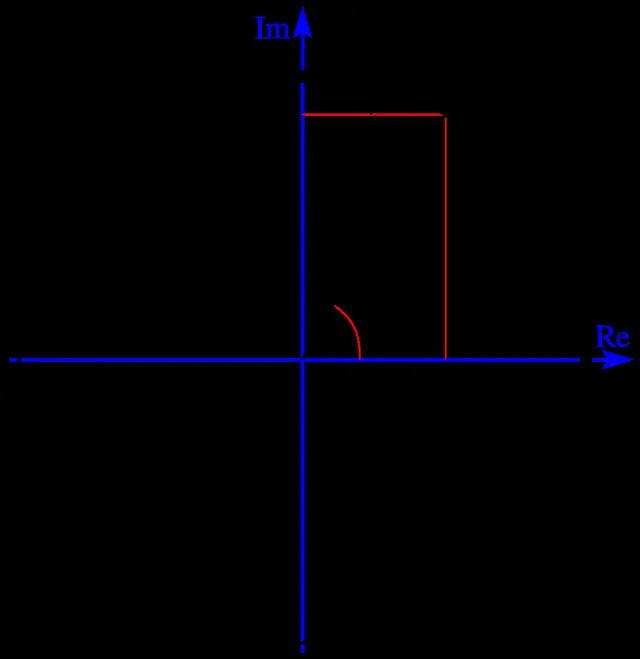
The general relation that e to the power of i times an angle equals the cosine plus i times the sine of that angle, of which the identity is the case at pi.
The solutions of raising a number to the nth power to get one, which are equally spaced points on the unit circle given by complex exponentials: a direct consequence of Euler's formula.
It unites five fundamental constants (e, the imaginary unit i, pi, one, and zero) with the operations of addition, multiplication, and exponentiation, each appearing once, in a single compact equation. Beyond its celebrated elegance, Euler's formula is the workhorse that connects exponentials to trigonometry and underlies complex analysis, signal processing, and physics.
It is an exact mathematical identity, proven from the definitions of the exponential and trigonometric functions, so it has no empirical limits or error bars. Its only requirement is that the angle be measured in radians. The frequent descriptions of it as the 'most beautiful' or 'most remarkable' equation are subjective aesthetic judgements from opinion polls, not mathematical facts, and should be attributed as such rather than stated as objective.
The identity, e to the i pi plus one equals zero, is the special case at pi of Euler's general formula; the two are often conflated, and Feynman's 'jewel' praise was for the general formula, not the compact identity. And it is uncertain whether Euler ever wrote the compact five-constant form himself, though the formula is unquestionably his.
Yes, as far as the evidence goes. Euler's Identity is rated Empirical here: it rests on studies or measurements rather than on a saying.
Rated from two sources. 609 of the 1,116 entries carry this rating. How the scale works.
The best-known laws are the least likely to rest on measurement.
Derived from Euler's formula, which Leonhard Euler published in his Introductio in analysin infinitorum (1748); Roger Cotes had given an equivalent logarithmic relation in 1714, and it is unknown who first stated the compact identity explicitly.
10 languages, as recorded on Wikidata. These are names the idea already goes by, not translations we made. The whole index by language.
Everything above traces to two pages on en.wikipedia.org: both secondary, accounts of the original rather than the original itself, which has not been located for this entry. Nothing is written from memory, and the method is written down. Spot an error or a better source? Suggest a fix.
