The Matthew Effect
also known as — Cumulative advantage, The Matthew principle
"To those who have, more is given: advantage accumulates and the eminent gain more than their share."
Those who already hold an advantage (status, wealth, citations, attention) tend to gain still more, while those who start with little fall further behind. Initial position, not merit alone, shapes who accumulates rewards.
Rated Empirical: grounded in studies or measurable evidence. The other 608.
A small early lead compounds through positive feedback: early success attracts resources (funding, visibility, collaborators, links) that generate more success, widening gaps over time even when underlying ability is similar. Network science formalises this as preferential attachment: new connections attach preferentially to the already well-connected, producing rich-get-richer distributions.
The network-science formalisation (Barabási–Albert, 1999): 'the rich get richer' as a growth rule that generates scale-free networks.
The general sociological mechanism, running in both directions: early advantage compounds upward, early disadvantage compounds down.
A close cousin in the sociology of credit: discoveries named for the eminent rather than the originator; Stigler himself credited the idea to Merton.
It separates reward from underlying merit: because success feeds on success, observed eminence overstates real differences in ability, and small initial edges (a birth month, an early citation, a first-mover link) can decide long-run outcomes. It is central to how inequality, fame, and scientific credit actually accumulate.
It is a tendency, not a deterministic law — advantage can stall or reverse at ceilings, through regression, disruption, or scandal, and a 2014 review found mixed evidence including compensatory patterns for capped skills. Its whole critical use is to separate reward from merit, so it should never be read as saying the advantaged deserve their lead. The Biblical framing is an evocative metaphor, not an endorsement, and popular extensions (Gladwell's '10,000 hours') have themselves been challenged.
It does not claim the successful are undeserving, nor that outcomes are fixed at birth. It claims that advantage compounds, so success reflects starting position and feedback as well as ability: a statement about mechanism, not merit.
Yes, as far as the evidence goes. The Matthew Effect is rated Empirical here: it rests on studies or measurements rather than on a saying.
Rated from three sources. 609 of the 1,116 entries carry this rating. How the scale works.
The best-known laws are the least likely to rest on measurement.
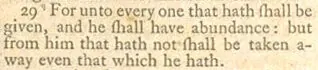
Named and analysed by the sociologist Robert K. Merton in his 1968 paper 'The Matthew Effect in Science' (Science), after the Gospel of Matthew (25:29): 'unto every one that hath shall be given.' The paper drew heavily on Harriet Zuckerman's research on Nobel laureates; Merton later wrote that it should have appeared under joint authorship.
Everything above traces to science.org, en.wikipedia.org and doi.org, three sources in all, two of them the original publications rather than accounts of them. Nothing is written from memory, and the method is written down. Spot an error or a better source? Suggest a fix.
