The Bullwhip Effect
also known as — The Forrester effect, Demand amplification
"Small wobbles in consumer demand swell into ever-larger swings in orders as they travel up a supply chain."
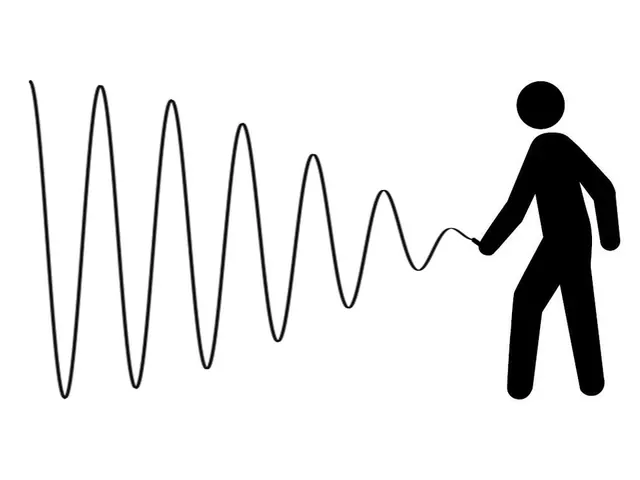
The bullwhip effect is the tendency for small fluctuations in downstream consumer demand to be amplified into progressively larger swings in orders and inventory as they move upstream through a supply chain, from retailer to distributor to manufacturer to raw-material supplier. Formally, the variance of the orders an upstream member places exceeds the variance of the demand it receives, and the distortion grows at each tier. The name evokes a whip: a small flick of the wrist at the handle, consumer demand, produces an ever-wider arc toward the tip, upstream orders.
Rated Empirical: grounded in studies or measurable evidence. The other 608.
Lee, Padmanabhan, and Whang identified four operational causes. Demand-forecast updating: each tier forecasts from the orders it observes and adds safety stock, so orders overreact to changes and pass an exaggerated signal on. Order batching: to save on ordering and transport, firms order in lumps rather than continuously, so suppliers see spiky streams. Price fluctuation: promotions and forward-buying make purchasing diverge from consumption. And rationing or shortage gaming: when supply is short and allocated pro rata, buyers inflate orders to secure more, then cancel the phantom orders when the shortage eases. These arise from rational local decisions, not merely from irrationality.
The earlier name from Jay Forrester's industrial dynamics, which first identified through simulation how feedback delays and inventory policies amplify demand variability upstream.
The distinction between amplification driven by human misperception of feedback, as in the beer game, and Lee et al.'s finding that rational, optimising behaviour alone can produce it.
The amplified, distorted signal is costly: it drives excessive inventory investment, poor customer service, lost revenue, misguided capacity plans, ineffective transport, and missed production schedules. Understanding it points to the main remedies: sharing true point-of-sale demand upstream, as Walmart does, coordinating through vendor-managed inventory and collaborative forecasting, shortening lead times, and removing incentive distortions with everyday low pricing and allocation based on past sales. It is a cornerstone of modern supply-chain management and of the case for information sharing across firms.
The effect is not universal or always present: it depends on the demand process and ordering policy, and under some conditions order smoothing or particular demand structures reduce or eliminate amplification, with empirical studies finding it varies in magnitude and does not appear in every chain. Its framing is also nuanced: early accounts stressed human misperception, but the key contribution was to show rational local optimisation can produce it, so attributing it solely to either irrationality or rationality oversimplifies. Order-smoothing remedies are not free, trading against inventory and service, and the classic four-cause analysis rests on specific model assumptions.
It is not simply caused by irrational managers; Lee et al. showed rational local decision-making alone can produce it, so the fix is structural and informational, not just smarter people. Forrester and Lee et al. are not the same discovery: Forrester identified and modelled the phenomenon in 1961, while Lee, Padmanabhan, and Whang named the four causes and the 'bullwhip' term in 1997. Sharing point-of-sale data reduces but does not by itself remove all four causes. And it does not affect only manufacturers; the worst distortion is typically at the most upstream tiers.
Yes, as far as the evidence goes. The Bullwhip Effect is rated Empirical here: it rests on studies or measurements rather than on a saying.
Rated from two sources. 609 of the 1,116 entries carry this rating. How the scale works.
The best-known laws are the least likely to rest on measurement.
First identified and modelled by Jay Forrester in his industrial-dynamics work, notably 'Industrial Dynamics' (1961); the term 'bullwhip effect' was coined at Procter & Gamble and the modern four-cause framework established by Hau Lee, V. Padmanabhan, and Seungjin Whang in two 1997 papers.
9 languages, as recorded on Wikidata. These are names the idea already goes by, not translations we made. The whole index by language.
Everything above traces to sloanreview.mit.edu and gsb.stanford.edu: the publications themselves, not accounts of them. Nothing is written from memory, and the method is written down. Spot an error or a better source? Suggest a fix.
