The Sorites Paradox
also known as — The paradox of the heap
"One grain isn't a heap, and adding one never makes a heap, yet heaps exist."
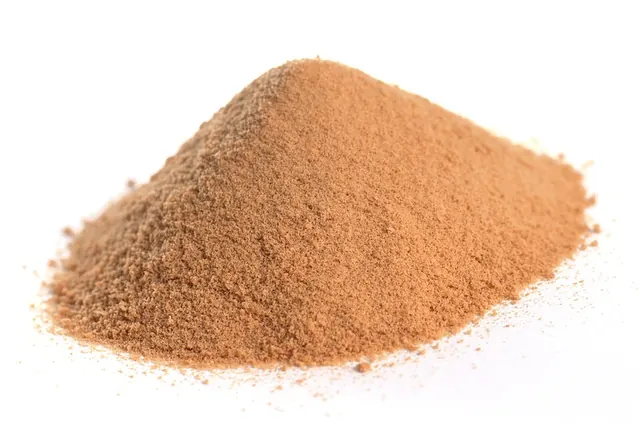
The sorites is a paradox of vague predicates. A single grain of sand is not a heap; adding one grain to something that is not a heap never turns it into one; so, step by step, no number of grains ever makes a heap, which is absurd, since heaps plainly exist. The argument runs in reverse too, removing grains from a heap, and arises for any vague predicate, from bald to tall to rich.
Rated Contested: disputed, with the evidence still argued over. The other 256.
The paradox is a chain of seemingly valid steps from a true base case, that one grain is not a heap, through a long series of true-looking tolerance premises, that one more grain never makes the difference, to a false conclusion. Because both premises and inference look impeccable, the argument threatens classical logic and the principle that every statement is either true or false. The pressure point is the tolerance premise, that a single grain can never mark the boundary between heap and non-heap; most resolutions locate the fault there.
Williamson and Sorensen's view that there is a sharp boundary, a precise grain at which non-heap becomes heap, but its location is unknowable, so the tolerance premise is simply false, though we cannot say where.
Approaches that give up strict two-valuedness: fuzzy logic allows degrees of truth between true and false, while supervaluationism counts a claim true only if true on every way of sharpening the vague term.
It is the paradigm case of the problem of vagueness, a central puzzle in the philosophy of language and logic. Because vague predicates pervade ordinary language, the paradox forces a choice about the foundations of logic itself (whether to keep bivalence, admit degrees of truth, or accept unknowable sharp boundaries) and it remains a live test for every theory of how vague words work.
The paradox is unresolved: most philosophers take the argument to be defective somewhere, but there is no consensus on which resolution is correct, and every leading theory carries recognised costs (epistemicism's unknowable boundary, degree theories' artificially precise truth-values). Its attribution to Eubulides is traditional but rests on later secondhand reports rather than surviving text. And higher-order vagueness, the vagueness of the very notion of a borderline case, remains actively contested, so the problem reaches deeper than any single sorites series.
It is not just about heaps or a mere word game: it targets all vague predicates and threatens classical logic and bivalence generally. It has no settled solution, competing frameworks persisting. And epistemicism does not claim the boundary is arbitrary or conventional; it claims a genuine sharp boundary fixed by usage whose location is unknowable. Vagueness itself should not be confused with ambiguity or mere imprecision, which are distinct phenomena.
That is exactly what is in dispute. The Sorites Paradox is rated Contested here: the effect is claimed, the evidence is argued over, and specialists disagree.
Rated from two sources. 257 of the 1,116 entries carry this rating. How the scale works.
The best-known laws are the least likely to rest on measurement.
Usually credited to the Megarian philosopher Eubulides of Miletus in the fourth century BC, though no original statement survives; it attracted little sustained interest until the late nineteenth century, when the problem of vagueness became central to philosophy of language.
9 languages, as recorded on Wikidata. These are names the idea already goes by, not translations we made. The whole index by language.
Everything above traces to plato.stanford.edu and en.wikipedia.org: two secondary sources, accounts of the original rather than the original itself, which has not been located for this entry. Nothing is written from memory, and the method is written down. Spot an error or a better source? Suggest a fix.
